
Hotspots
A hotspot is a local skin inflammation that you can recognize by a dog that is extremely itchy in one specific spot. The animal will continuously bite, lick, and scratch this spot. When you check the dog's skin, you will see a bald, red, and moist spot. The skin is clearly irritated and extremely itchy, because the dog won't leave the spot alone. It's time for a visit to the vet, as the dog is probably suffering from a hotspot...

How can a dog get a hot spot?
A hot spot is a localized skin inflammation caused by the dog itself. This is because the animal keeps licking, scratching, and/or biting an area that itches.
There are various ‘culprits’ that can cause this itching, for example: parasites (fleas or ticks), an insect bite or a (food) allergy. Stress can also be the cause of a hot spot. Some dogs that suffer from stress bite and lick excessively in one spot, causing a hot spot.
Any dog can develop a hotspot, but some breeds are more susceptible than others. These are breeds with a thick, woolly undercoat, such as Golden Retrievers, Bernese Mountain Dogs, Akita Inus, or Leonbergers. If these animals' coats are not properly groomed, their skin can become irritated and itchy. Even when these animals swim often and their coat dries slowly, this can cause skin irritation.
What is a hot spot?
Licking, biting, and scratching destroy the top layer of the skin. But it doesn't stop there. Bacteria that are always present on the skin but do not normally cause problems now cause inflammation in the broken skin; this is called a hotspot. This local skin inflammation causes even more itching, causing the dog to lick and scratch again, resulting in a hotspot that gets bigger and bigger.
How do you treat a hot spot on your dog?
To cure a hot spot, it is necessary to break the vicious cycle, starting with stopping the itching. In addition, it is necessary to clean the hot spot and keep it clean. It is best to visit a veterinarian for this. A veterinarian will take several steps:
A veterinarian will remove the fur around the hot spot and then clean the area with a disinfectant, such as Betadine.
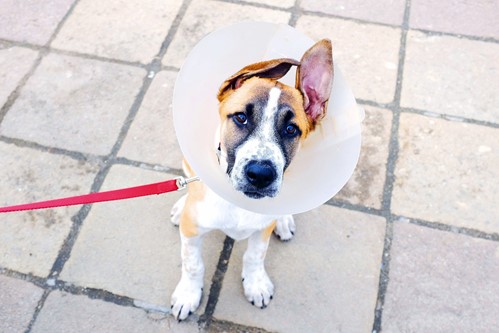
A dog with a hot spot may be fitted with a collar to prevent it from reaching the irritated area of skin, or it may be fitted with a sock if the hot spot is on one of its paws.
A veterinarian may also prescribe medication to relieve the itching.
Treatment of the local skin inflammation will consist of an ointment or, in severe cases, antibiotics.
*Treatment of a hot spot may consist of applying corticosteroid ointment to the area. Corticosteroids are effective against inflammation and the associated symptoms.
Make sure that the skin remains clean and dry after treatment, otherwise the healing process will be delayed. It is also necessary to identify and eliminate the cause (parasites, stress, etc.) of a hotspot; this will prevent new hotspots from developing.


How can you reduce the risk of hot spots?
Treat your dog regularly (preventively) against ticks and fleas.
Dogs that swim often should be treated more frequently against ticks and fleas.
Regularly brush dogs with thick, woolly undercoats.
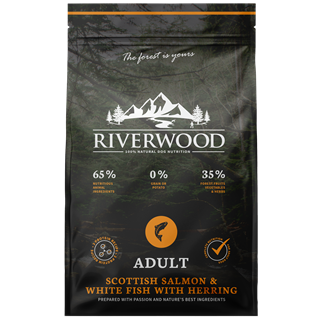
Choose a diet that supports the skin and coat (e.g., Riverwood Scottish Salmon & White Fish with Herring) or supplement their diet with salmon oil (see Riverwood Norwegian Salmon Oil here).
Now you know what a hotspot is and how you can reduce the chance of your dog getting one. Diet also has a significant effect on the quality of a dog's skin and coat. Riverwood Scottish Salmon & Whitefish with Herring has been specially developed for dogs with skin and/or coat problems. View the Riverwood Scottish Salmon & Whitefish with Herring product here.